Diego
Kevin the Star StrikerDiego is the Wild Soccer Bunch’s left forward and its “tornado,” a player whose speed can overwhelm an opponent when his asthma is under control. His body is also a constant reminder that talent does not erase vulnerability: during an asthma attack he becomes an ordinary left forward, while on a good day he is faster than a tornado. Across the team’s struggle against the Unbeatables, Diego moves between illness, fear, and explosive athletic force, finally returning to the match strongly enough to help secure the winning run.
Identity and Playing Role
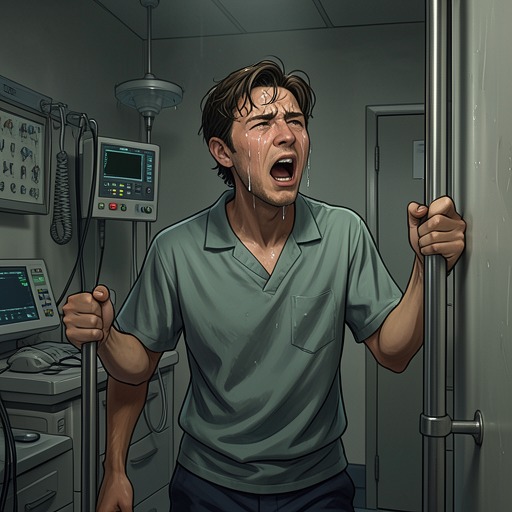
Diego is defined first by the contrast between his medical condition and his footballing identity. He has asthma, and the attack itself changes how he can perform: the same player who can become the team’s “tornado” is reduced to a regular left forward when he cannot breathe freely. The description does not make illness his entire character, however. Soccer is his life, and his exceptional speed gives him a distinctive place in the Wild Soccer Bunch’s attack. His value comes not from being invulnerable but from the spectacular intensity available to him when his body cooperates.
Diego is also part of the group’s blunt, teasing culture. Kevin describes Danny as his best friend and the world’s fastest right forward, but Diego occupies the opposite attacking side as the team’s left forward. Together, these descriptions establish the Wild Soccer Bunch as a machine whose players have sharply differentiated functions, with Diego’s acceleration supplying the side of the attack associated with sudden movement and disruption.
Illness and Exclusion from Training
During the fight to return to the soccer field after winter, Diego is absent from the group’s “great sacrifice” because he is in bed with the flu. Unlike the teammates who were grounded or banned after damaging property, Diego and Roger are not punished for that incident. Diego’s absence has a different cause: sickness. Even so, his freedom from grounding does not make him available. At his home on St. Charles Street, he stands in the kitchen with a thermometer in his mouth while his mother watches the reading, insisting that he must be below 99 degrees before he can play. The rule feels unfair to him because he had been sent to school the previous day with a temperature of 100 degrees, but his mother treats soccer as a separate and more dangerous matter.
His condition becomes more serious during the team’s preparation. After two days of practice, Diego’s fever finally catches up with him, and there are no longer any ice cubes available to conceal or relieve it because his mother has defrosted the freezer. The illness removes him from the team precisely when the players are already struggling with the weaknesses of Josh and Roger. Diego’s absence therefore carries both physical and tactical consequences: the group loses one of its most dangerous attackers while trying to prepare for a decisive match.
Return to the Field
Diego’s return is presented as a sudden stroke of luck. When Kevin and the others hurry to the soccer field, Diego is waiting outside it, giving the group at least six players. Kevin greets him enthusiastically and asks whether he has recovered from the flu, but Diego answers by shaking his head and breathing heavily. His arrival is therefore not a clean recovery scene. He has come back before he is fully well, and his breathing makes the cost of that decision visible.
The moment also reveals the team’s improvised way of caring for one another. Danny immediately asks how Diego managed to get out, while Kevin responds with a joke about whether he had used another trick to escape. The humor does not cancel the danger; it is the group’s way of absorbing fear and keeping Diego inside the circle. His presence matters because the Wild Soccer Bunch needs every player, but it also matters because Diego refuses to let sickness completely determine whether he belongs on the field.
Contribution to the Comeback
In the final match, Diego’s importance becomes clearest when the score has reached nine to seven. Rain has softened the ground into mud, but the Wild Soccer Bunch has practiced on such a field for twelve days, whereas the Unbeatables slide across it awkwardly. The conditions convert Diego’s recovery into a dramatic athletic return. At the moment when the team is dancing through its opponents, Diego forgets his asthma and becomes the Tornado again. His illness does not vanish as a fact; rather, the game produces a temporary transformation in which his speed is once more available to the team.
That transformation contributes directly to the reversal. Kevin scores his third goal, Danny scores his second, and Joey brings the score level at seven to seven. Tyler then scores from halfway down the field, the wind carrying the ball beyond Octopus’s reach. Diego’s renewed force follows these coordinated attacks and helps the Wild Soccer Bunch reach the decisive lead. His return is thus not an isolated display of individual brilliance. It takes place inside a sequence of passing, midfield control, changing weather, and shared movement in which the team converts preparation for mud into an advantage.
Diego’s role also sharpens the book’s distinction between domination and cooperation. Mickey’s Unbeatables rely heavily on the Bulldozer’s personal scoring power, while Diego’s best contribution comes when he re-enters a coordinated attack. The Wild Soccer Bunch does not require every player to possess the same body or the same kind of strength. Its comeback depends on recognizing when a player can offer speed, when another must defend, and when the ball must be passed rather than held.
Fear, Strength, and Ending
Diego is one of the players troubled by fear before the confrontation with the Unbeatables. When Larry asks for complete trust, Diego voices the question that has been troubling the whole group: what should they do with their fear? Larry answers that fear is not merely a weakness but their strength, because recognizing danger gives them a chance to respond. Diego’s question is significant because his asthma makes fear concrete rather than abstract. He knows that the body can fail in the middle of the game, and his hesitation is connected to an actual physical limit.
During the climactic match, Diego’s return embodies Larry’s idea without turning him into a fearless superhero. He breathes heavily when he arrives, yet later becomes the Tornado when the game reaches its most demanding phase. The sequence holds both truths together: Diego remains vulnerable, and he is still capable of decisive athletic power. His courage lies less in conquering illness permanently than in participating despite uncertainty and allowing the team to use his strength when it appears.
The Wild Soccer Bunch eventually wins, and Roger becomes the unexpected hero by scoring the decisive tenth goal. Diego does not receive the final individual spotlight, but his presence is part of the collective reversal that makes Roger’s goal possible. The victory therefore confirms Diego’s importance without reducing the match to his personal triumph. He is a recurring example of the team’s larger principle: strength can be intermittent, fear can be acknowledged, and a player who is not always physically available can still be essential to the group’s success.